Your Nose Is Not A Meter
Using your senses during a hazardous materials incident is one of those topics that makes instructors uncomfortable. Not because sensory clues are useless, but because they are incredibly easy to misuse. The moment someone hears that an odor or sound might help identify a hazard, there is a temptation to go looking for it. That is exactly what we do not want.
The reality is that responders should never intentionally smell, taste, or touch an unknown chemical. Exposure is not a detection method, and no amount of experience changes that fact. We have meters, reference materials, and established procedures for a reason.
But emergencies rarely unfold the way they do in a classroom.
Sometimes you step off the apparatus, and an odor is already in the air. Sometimes a victim tells you what they smelled before they became symptomatic. Sometimes a compressed gas cylinder begins hissing before anyone has a chance to deploy a meter. Sometimes a drum starts creaking as pressure builds inside it. Those clues are not something we seek out, but they are often impossible to ignore.
The key is understanding what those clues actually tell us. They do not identify a chemical. They simply become another piece of information that helps us build a better picture of the incident. The responders who ignore them lose valuable intelligence. The responders who trust them completely are just as dangerous.
Size-Up Starts Before The Meter
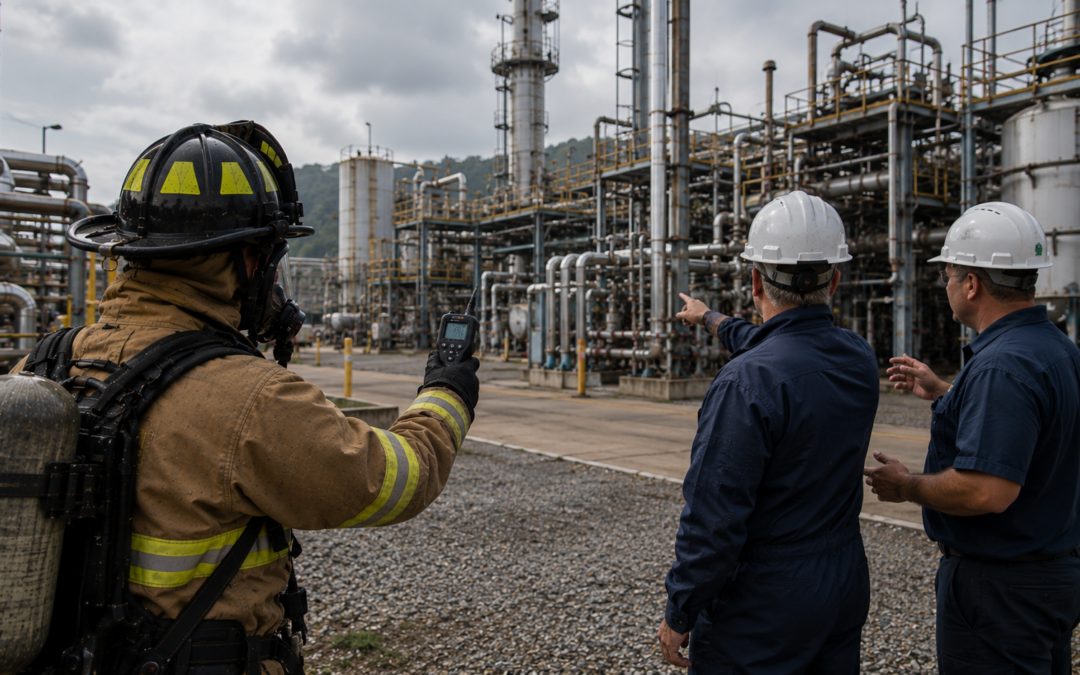
Every hazmat technician has experienced it. Before a monitor is turned on or a reference book is opened, the brain has already started processing information. We are looking at the occupancy, the weather, container conditions, victim locations, and product behavior. We are listening for leaking valves, pressure relief devices, or stressed metal. We are noticing whether a vapor cloud is rising, hugging the ground, or moving with the wind. Occasionally, we are greeted by an odor before we have even finished climbing off the rig.
Those first few seconds matter because they shape every decision that follows.
A gasoline-like odor immediately raises concerns about a volatile, flammable liquid that produces significant vapor. A bleach-like smell at a pool supply warehouse may push oxidizers higher on the list of possibilities. Victims describing rotten eggs in a confined space should immediately make responders think about hydrogen sulfide. None of those observations identifies the product, but they influence which meters come forward, how aggressively we isolate the scene, what level of PPE we consider, and which questions we ask next.
That is really what size-up is all about. No single observation solves the incident. Every clue simply narrows the field until the chemistry, monitoring data, and investigation begin confirming what is actually happening.
Your Senses Can Help You… Until They Can’t
The danger begins when responders assume their senses are reliable detectors.
Hydrogen sulfide is probably the best example. At low concentrations, it produces the familiar rotten-egg odor associated with sewer gas. As concentrations increase, however, the smell disappears. The gas is still there. Your nose simply stops working. Suddenly, the very warning system you trusted has failed, even as the atmosphere becomes more dangerous. That is why hydrogen sulfide continues to injure and kill responders who believe the fading odor means conditions are improving.
Fuel gases create another misconception. Most people believe natural gas has a smell, but methane is naturally odorless. Propane is naturally odorless as well. The smell we recognize comes from sulfur-based mercaptans intentionally added so leaks can be detected. Even then, odor is not foolproof. Some industrial gas systems are not odorized, odor fade can occur, and a surprising percentage of people simply cannot detect mercaptans at all.
Vision and hearing are often far more dependable because they gather information without requiring exposure. A relief valve cycling, a cylinder hissing, a bulging drum pinging as pressure builds, or a frost line creeping down a tank may provide valuable warning long before a catastrophic failure occurs. We spend hours teaching paramedics to recognize abnormal lung sounds, yet we rarely train hazmat responders to recognize the sounds containers make when something is wrong. That is probably a missed opportunity.
The Best Clues May Come From Someone Else
One of the safest ways to use sensory information is to borrow someone else’s.
Victims have already been exposed. Witnesses have already experienced the release. A well-conducted interview can provide valuable clues without placing responders at additional risk. The important part is allowing people to describe what they experienced instead of suggesting the answer. Asking whether something smelled like chlorine or gasoline plants an idea in their mind. Asking them to describe the odor in their own words often produces much more useful information.
People rarely speak in chemical terminology. They compare odors to nail polish remover, model glue, burnt plastic, almonds, matches, hospital disinfectant, or rotten cabbage. Those comparisons may sound imprecise, but when combined with the occupancy, victim symptoms, container type, and monitoring results, they can dramatically narrow the list of possibilities.
The same principle applies to witnesses themselves. Separate them before interviewing them whenever possible. Once one person describes an odor a certain way, everyone else tends to adopt the same description. Independent observations almost always produce better intelligence than group discussions.
Every Clue Needs Science Behind It
Experienced hazmat responders eventually develop mental associations between common chemicals and familiar smells. Chlorine resembles bleach. Acetone smells like nail polish remover. Toluene and xylene resemble paint thinner or model glue. Formaldehyde has the unmistakable pungent odor associated with embalming fluid. Acrolein often reminds people of burning grease or burnt plastic. Those comparisons are worth learning because they make interviews more productive and help responders organize their thinking.
The mistake is believing those associations identify the product.
Many unrelated chemicals produce similar odors. Individual sensitivity varies dramatically. Wind, humidity, concentration, contamination, and even previous exposure can change what people perceive. That is why OSHA’s Hazardous Waste Operations and Emergency Response standard, 29 CFR 1910.120, and NFPA 470 emphasize hazard recognition, monitoring, risk assessment, and verification rather than intuition alone.
Hazmat response has always been about collecting independent pieces of evidence until they begin telling the same story. The container tells you something. The meter tells you something. The victim tells you something. The weather tells you something. Your senses may tell you something too, but only if you remember they are another clue, not the conclusion.
The next time you arrive at a hazmat incident, pay attention to what you see, what you hear, and even what you accidentally smell. Use those observations to build your initial strategy, but never let them replace the science that follows. The best responders are not the ones with the sharpest senses. They are the ones who know exactly where those senses stop being reliable and let their training take over.