Hazmat Threats You Are Not Hearing About
There is this weird thing that happens when we talk about hazmat threats. We spend all this time training for chemical, biological, and radiological incidents. Then somebody inevitably asks the question: Does this stuff really happen that often?
Yeah. It does.
The problem is that most of us never hear about it.
Start digging into what is happening around the world, and things get weird really fast. Radioactive contamination showing up in frozen shrimp. An entire family poisoning themselves with pufferfish. Somebody is threatening to poison bottled water unless they get paid in Bitcoin. Evidence of incinerators exploding. Firefighters are being sent to the hospital after responding to what appeared to be a routine vehicle accident.
Some of these stories sound like scenarios an instructor would make up and immediately get accused of being unrealistic.
Except they actually happened.
That was probably the biggest thing that hit me during our conversation about emerging hazmat threats. There is so much happening around the world that we simply never hear about. Unless you are actively looking for these incidents, they come and go without most responders knowing they happened.
That is a problem. Something that happened halfway around the world yesterday could absolutely happen in your response district tomorrow.
The Weirdest Hazmat Drill You Can Imagine Probably Already Happened
Let’s start with radioactive shrimp.
Yes. Radioactive shrimp.
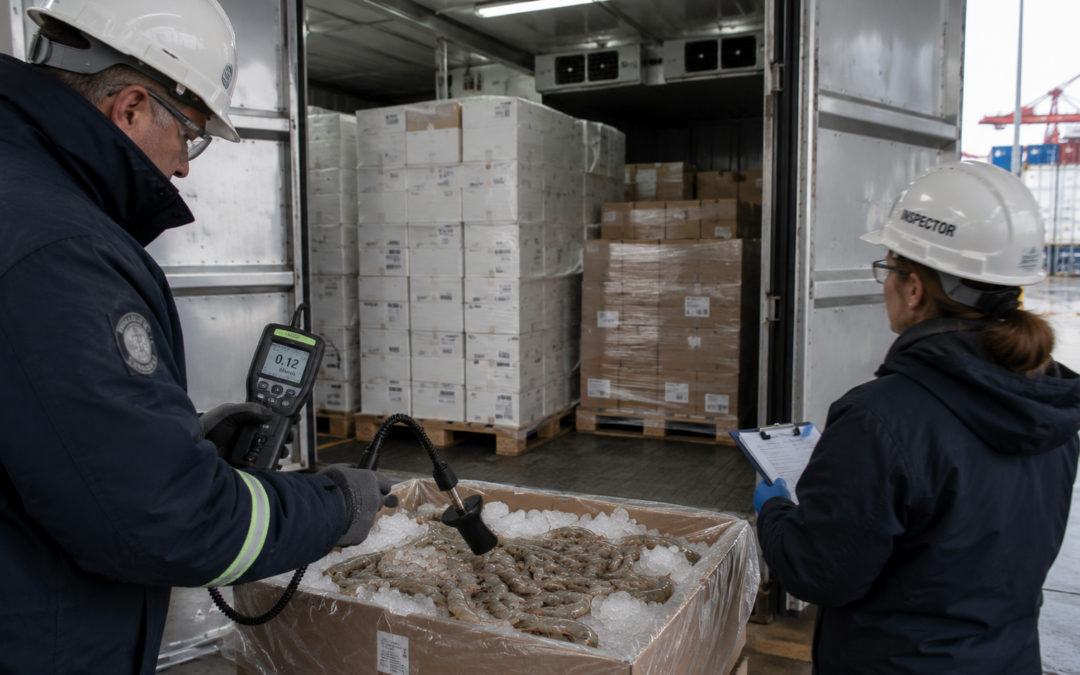
Frozen shrimp imported from Indonesia reportedly became part of an investigation involving radioactive contamination. As investigators began pulling at that thread, concerns expanded beyond a single package of seafood. The investigation eventually reached an industrial area where food processing and other facilities were located. One suspected connection involved radioactive material potentially entering the area through contaminated scrap metal.
Now think about how ridiculous that call would sound if I gave it to you as a tabletop.
You are called to investigate radioactive contamination involving frozen shrimp. Go.
Half the room would immediately tell me the scenario was unrealistic.
But that is exactly why these incidents are worth paying attention to.
Nobody calls 911 and says, “Hey, we have radioactive shrimp.” The problem probably starts somewhere completely different. It could begin with a food recall or an unusual radiation reading. By the time the hazmat team becomes involved, whatever caused the problem may have already traveled through several facilities and transportation networks.
When Contamination Starts Traveling
We use radioactive materials everywhere. Industry, medicine, construction, and manufacturing all rely on them. If someone loses a source, improperly discards it, or accidentally mixes it into scrap, that material can travel. It may pass through recycling facilities, scrap yards, and processing plants before anyone realizes there is a problem.
And that idea is not limited to radiation.
Sometimes the place where you find the hazardous material is only the last stop on a much longer trip. Finding the source may solve only half the problem. The next question has to be: Where else has this stuff already been?
Think about what that means operationally. You may control the location in front of you, yet still face a much larger incident elsewhere. The product could have traveled on trucks, moved through warehouses, entered another facility, or reached consumers before anyone identified the original problem.
Suddenly, your hazmat incident is not just about containment. It is about figuring out where the material came from and where it went.
That is a very different problem.
The Threat Might Be Growing In Someone’s Backyard
We spend a tremendous amount of time talking about chemical warfare agents, clandestine laboratories, terrorism, and people manufacturing dangerous substances.
Meanwhile, some extremely toxic stuff is growing in people’s gardens.
That creates an entirely different problem.
Naturally occurring toxins and poisonous plants deserve attention because people can readily obtain many of them. You do not necessarily need suspicious chemical purchases. You do not need a laboratory filled with glassware. In some cases, you may just need to know which plant to pick.
From a first responder’s perspective, these cases can be incredibly difficult to recognize. Somebody becomes seriously ill or dies, but nothing about the scene immediately says hazmat. There is no leaking drum. No vapor cloud. No chemical suit hanging in the basement. Instead, it may initially look like a medical emergency, natural death, or food poisoning.
Pufferfish poisoning creates the same problem from a different direction. Tetrodotoxin can cause severe neurological effects, paralysis, and potentially fatal respiratory failure. In one of the incidents we discussed, multiple members of the same family suffered poisoning after eating pufferfish together.
The lesson is not that every firefighter needs to become an expert in toxic plants or exotic seafood.
The lesson is that sometimes the patient tells you that you are on a hazmat call before the scene does.
If multiple people suddenly become sick after eating the same meal, that should get your attention. When several patients have similar neurological symptoms without an obvious explanation, maybe we need to ask different questions. What did everyone eat? What did they drink? Where were they? Did they all touch or inhale the same thing?
Sometimes recognizing the hazmat incident is the hardest part of the hazmat incident.
The Chemical Does Not Care Why It Was Released
Then we get into deliberate contamination, and this is where things get even stranger.
Authorities in the Czech Republic reportedly investigated threats involving poison placed into bottled water on supermarket shelves. The alleged plan involved an extortion attempt demanding payment in Bitcoin.
Think about the chaos that it creates.
Maybe there are contaminated bottles. Maybe there are not. There could be one, or there could be fifty. Nobody knows yet. Which stores have them? Has anyone already bought one? Has anyone consumed the product?
The psychological impact can quickly become bigger than the physical release itself.
But here is the thing about intent. The chemical does not care.
Chlorine released because somebody screwed up behaves exactly the same as chlorine released because somebody wanted to hurt people. The vapor does not know the difference. Neither does your meter. Your PPE certainly does not know the difference.
What changes is everything happening around the hazmat problem.
Now you have evidence, crime-scene considerations, law-enforcement, and intelligence concerns. You may also have additional contaminated products or secondary devices. On top of that, somebody may be intentionally trying to create more problems for responders.
But before any of that matters, somebody still has to deal with the chemical.
That is why studying these incidents is useful even if the exact same attack never happens in your jurisdiction. We are not trying to predict someone’s exact plan. Instead, we are looking at the materials, methods, and failures so we are not completely surprised when something similar shows up.
Hazmat Loves To Hide Inside Normal Calls
One of the stories that stuck with me the most involved a minivan.
Not a chemical tanker. Not a tractor-trailer with placards. A minivan.
The vehicle rolled over and reportedly contained multiple cleaning chemicals. Those products mixed and created chlorine fumes, ultimately sending firefighters to the hospital.
Now put yourself on that rig.
The dispatch comes in as a vehicle accident. Maybe it is a rollover with possible entrapment. You are thinking of stabilization, trauma, leaking fuel, and traffic control.
You are probably not thinking of chlorine gas.
And that is exactly the point.
Hazmat does not care what the dispatch code says.
A contractor’s van can have solvents, adhesives, cylinders, oxidizers, acids, and cleaning chemicals in the back. A residential garage can contain gasoline, propane, pesticides, and pool chemicals. A pickup truck can be carrying agricultural chemicals. An evidence incinerator can suddenly explode because somebody threw something into it that really did not appreciate being heated.
The call can change before you even realize it has changed.
That is where basic hazmat awareness becomes so important. Something might smell wrong. Victims could show symptoms that do not match the original call. You may find an unexplained vapor or chemical containers where you did not expect them. Your meter might start giving you numbers that make absolutely no sense for the incident you thought you were on.
Stop.
Something is different.
That pause might be the thing that keeps you from becoming part of the problem.
The World Is Writing Your Next Hazmat Drill
This is probably the biggest reason responders need to pay attention to what is happening outside their own jurisdiction.
These incidents give us scenarios we would never think of ourselves.
A tanker crashes into another tanker near a fuel station. Radioactive material gets into a scrap stream and eventually contaminates an unrelated industry. An overturned minivan releases toxic gas. An evidence incinerator explodes because no one realizes what is being destroyed. Somebody threatens to contaminate a common consumer product.
Take any one of those stories, remove the location, and drop it into your district.
Now you have a training scenario.
What would you do? Who gets there first? What meters do they have? What PPE are they wearing? How long does it take before someone realizes this isn’t the call they thought they were responding to?
More importantly, who do you call when it gets bigger than your team can handle?
OSHA 29 CFR 1910.120 and NFPA 470 give us a framework for operating at hazardous materials incidents. However, no standard can tell you exactly what the next call will look like. We still have to recognize the problem before any of that training becomes useful.
That is where these emerging hazmat threats have the most value.
The next hazmat incident probably will not look exactly like the drill you ran last month. It might show up in a minivan. You could find it sitting on a supermarket shelf. Maybe it arrives inside a shipment of frozen food. Or it could be buried in a pile of scrap metal.
So start paying attention to the weird stuff happening around the world. Bring those stories back to the firehouse. Talk about them. Turn them into tabletops.
Then ask your crew the question nobody really wants to answer.
What would we do if this happened here?
Because somewhere in the world right now, somebody is probably writing your next hazmat drill for you.
They just have no idea they are doing it.