AI on the HazMat Scene: A Powerful Tool, a Dangerous Crutch
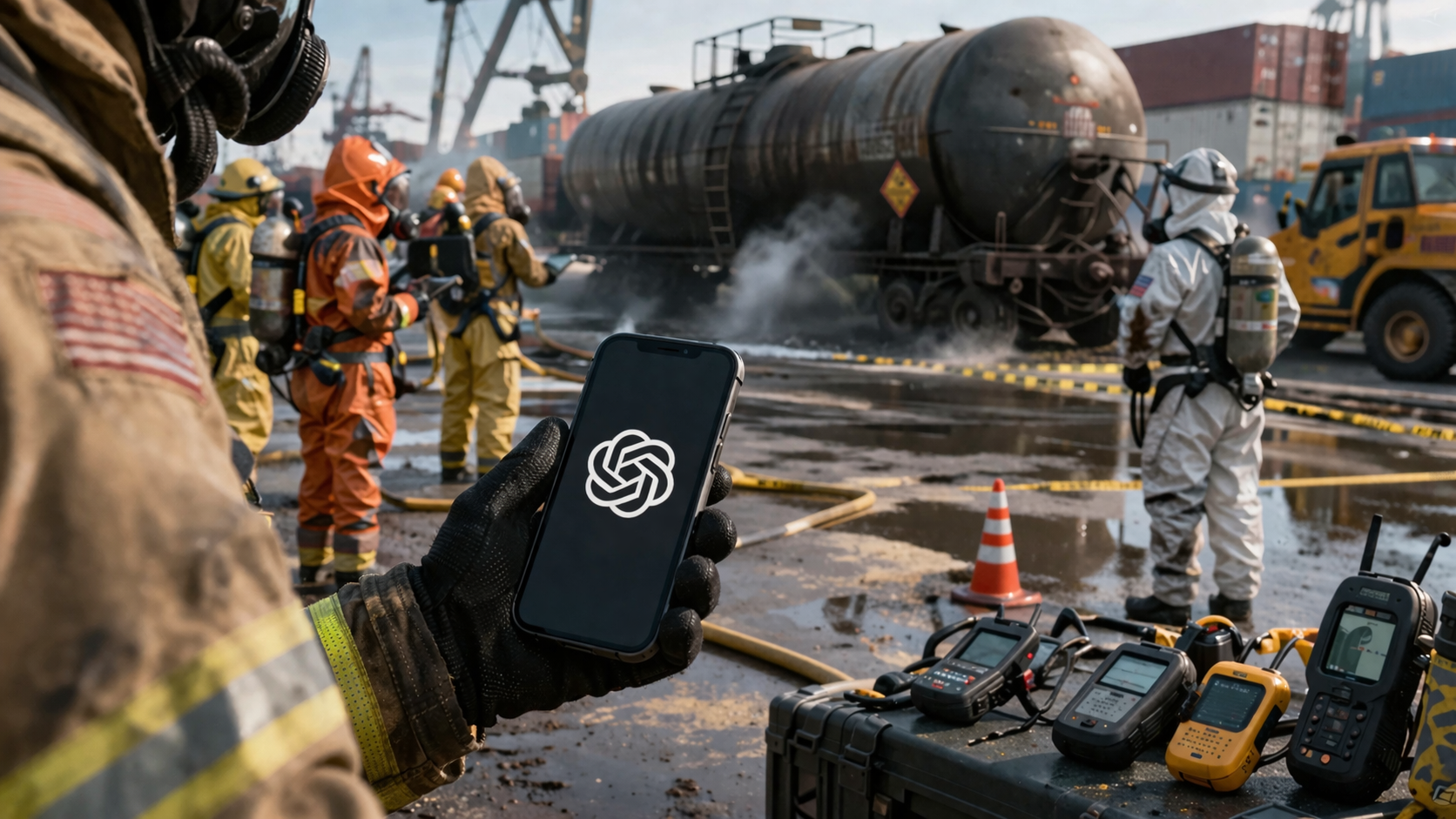
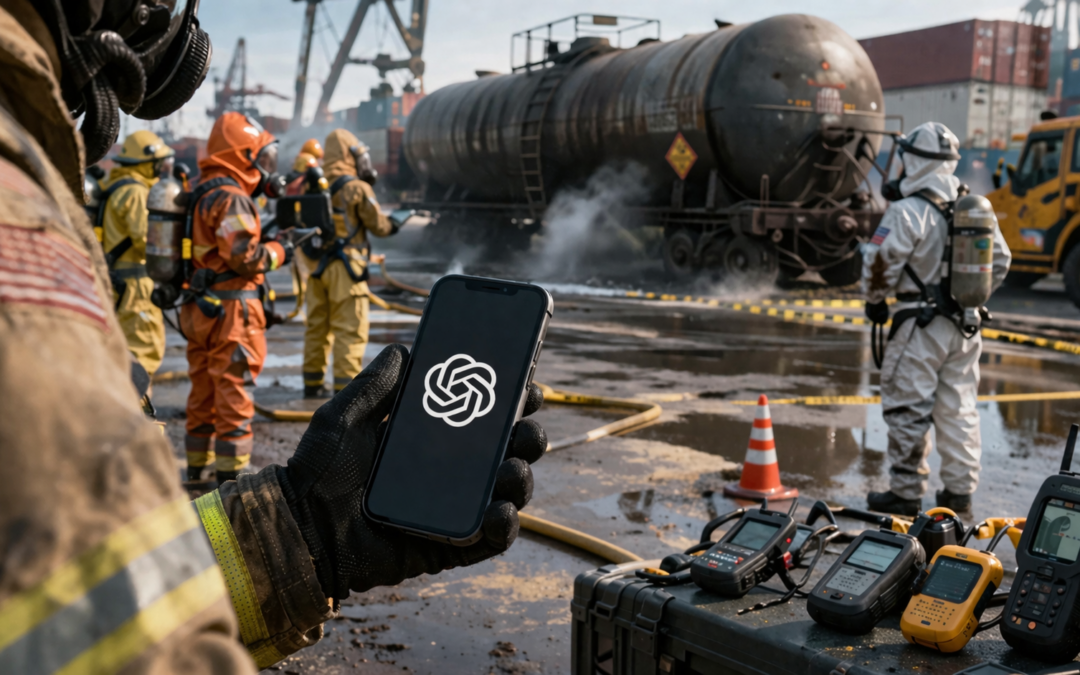
In HazMat response, the most dangerous mistake is often the simplest one: trusting something too quickly because it sounds confident. That is why, when I sat down to talk with Bob about artificial intelligence, the conversation never centered on whether AI is impressive. It is. The real question was whether responders understand what kind of tool they are holding. Bob made that point early and often. AI is useful, sometimes shockingly so, but it is not a decision-maker. It is not command. It is not a technician. And it is definitely not something you can blame later by saying, “Well, AI told me to do it.”
That distinction is what makes this conversation worth having in the HazMat world. We are not talking about replacing judgment. We are talking about improving access to information, improving the speed of analysis, and improving the way complex chemical and operational problems are translated into something a responder can actually use. Used correctly, AI can support safer decision-making. Used lazily, it becomes just another way to make bad decisions faster.
Turning Fragments Into Usable Information
One of the first places AI proves its value is in the kind of messy, incomplete information that responders see all the time. Bob talked about using it on container markings, UN numbers, shipping papers, fragmented SDS sheets, rail car types, and even symptom descriptions. That is important, because HazMat incidents rarely begin with a clean, complete package of information. More often, they begin with half a label, a damaged document, an unhelpful witness, and a scene that is already changing.
That is where AI can be genuinely helpful. It can take broken pieces of information and begin building a usable picture. A partially ripped SDS may still give enough information for AI to infer the likely chemical hazards. A shipping paper can be translated from static transport language into practical operational concerns. A vague report of dizziness, respiratory irritation, or altered mental status can be turned into a more structured set of possible toxicological questions. In that sense, AI is not creating truth out of thin air. It is helping the responder organize uncertainty faster than they could alone.
What makes the tool even more useful is the flexibility of the output. Bob pointed out that one of AI’s real strengths is that it can explain the same information at different levels depending on the audience. That matters in HazMat. A technician may want details about vapor pressure, flash point, boiling point, upper and lower explosive limits, and solubility. An operations-level responder may need a simpler version focused on isolation, PPE, and immediate life hazards. An incident commander may need it compressed into three points: what the threat is, what it may do next, and what resources are needed now. AI can help bridge those gaps in a way static references often cannot.
Asking Better Questions Instead of Just Chasing Answers
That bridge between technical understanding and operational communication may be one of AI’s strongest uses. HazMat teams live with a constant translation problem. The people with the most chemical understanding are not always the people making the final command decisions. That disconnect can create delays, misunderstandings, and dangerous assumptions, especially when information is being pushed uphill under pressure.
Bob framed this well when he described using AI to generate the next best questions for the incident commander based on current unknowns. That is a subtle but powerful shift. Instead of simply asking AI for answers, responders can use it to identify what they should still be asking. What are the major unknowns? What questions should the HazMat group be asking command? What questions should command be asking the HazMat group? How can technical concerns be translated into language the rest of the organization can understand?
That kind of support matters because incidents are often won or lost in the quality of the questions being asked early. If AI helps a technician recognize what has not yet been considered, it becomes more than a search tool. It becomes a force multiplier for situational awareness. It helps build better briefing sheets, better transfer-of-command updates, and better handoffs between crews during long-duration operations. It gives structure to the chaos, which is something every HazMat responder can appreciate.
Verification Is the Price of Admission
Still, none of this works if responders forget the most important rule: verify everything. Bob was clear about that, and he had a good reason. He described asking AI where something appeared in a document and getting a polished, confident answer that turned out to be completely wrong. That is not a minor flaw. In HazMat, that kind of error can ripple outward into bad PPE selection, poor planning, faulty site safety decisions, and avoidable liability.
That is why AI has to be treated like an assistant whose work must be checked, not an authority that can be trusted on its face. The same mindset that applies to meter interpretation, secondary confirmation, and source document review applies here. If AI gives you a citation, you go to the source. If it references a standard, you verify it in the standard. If it summarizes a policy, you compare it against the actual policy. That is not being skeptical for the sake of it. That is what professional discipline looks like.
In many ways, this aligns cleanly with the culture HazMat teams are supposed to have already. Under HAZWOPER and department-based safety programs, responders are expected to act within training, competency, policy, and verified hazard information. AI can support that process by organizing materials, summarizing program requirements, and comparing documents across standards, agencies, and local policy. But it cannot replace the responsibility to prove what is true. That remains a human job, and it always will.
From Chemical Reference to Operational Forecast
Where the conversation really started to stretch beyond simple document review was in the area of prediction. Not prediction in some futuristic fantasy sense, but prediction in the very practical HazMat sense of asking: what is this chemical, in this container, under these specific environmental conditions, likely to do next? That is where AI starts to move from being a research assistant to being a meaningful tactical support tool.
Bob talked about the value of unified chemical profiles built from multiple sources such as toxicological data, SDSs, chemical databases, and regulatory references. That kind of merged profile gives responders a much better starting point for risk assessment than scattered pieces of information pulled from five different places. Instead of hunting down vapor pressure in one place, flash point in another, and solubility somewhere else, AI can bring those elements together in a way that supports faster interpretation. That is not just convenient. It affects how responders model behavior, anticipate release conditions, and understand exposure risks.
More interesting still is the ability to move beyond known data when empirical information is limited. Bob mentioned AI models that can estimate chemical properties or hazard classifications based on molecular structure. That kind of capability is especially compelling for unusual chemicals, emerging products, or planning scenarios where complete data may not be readily available. The key, of course, is that predicted values are not the same thing as confirmed values. But in pre-planning, tabletop exercises, and even early-stage field assessment, those predictions may still provide a useful frame for asking smarter questions.
Why the GEMBO Model Makes So Much Sense
The strongest operational example Bob offered was using AI to support the GEMBO sequence: stress, breach, release, dispersion, engulfment, and harm. That is where the technology begins to sound less like a novelty and more like something that could fit directly into the way HazMat professionals already think. Instead of using AI merely to identify a substance, responders can use it to model how that substance may behave in a container under a specific set of conditions.
Start with the stressor. Was the container exposed to mechanical damage, thermal insult, or some form of chemical incompatibility? That matters, because the same product behaves very differently depending on the type of stress that precedes the release. From there, AI can help support analysis of breach likelihood, breach type, leak rate, secondary failures, and downstream dispersion behavior. It can assist in turning a static product reference into a sequence-of-events forecast.
That is a major shift in usefulness. HazMat incidents are not won by identification alone. They are managed by understanding behavior. Once responders understand how a container is failing, how a release is occurring, and how that release is likely to move through the environment, they are in a much better position to make decisions about protective actions, control zones, PPE, and public safety messaging. AI does not replace that judgment, but it can give responders a faster draft of the problem they are trying to solve.
A Better Tool for Tabletops, Training, and Preplanning
For all the scene-based possibilities, I kept coming back to how valuable this may be in training. Bob’s example prompt was a good one: give AI a container type, a chemical identifier, and environmental conditions, then ask it to generate a pre-populated GEMBO model event sequence including likely stressors, breach types, release rates, dispersion behavior, and harm mechanisms. That is not a toy. That is a serious tabletop engine if used by people who know how to challenge the results.
This is where instructors can start building familiarity without handing over any real authority. You can change the wind. Raise the ambient temperature. Add humidity. Change elevation. Introduce an intervention. Then ask what changes and why. That kind of what-if modeling is exactly what good preplanning and training should encourage. It teaches responders not just to memorize references, but to think in terms of consequence and sequence.
It also creates a safer place to develop trust boundaries with the technology. Crews can learn where AI is strong, where it becomes vague, and where it starts sounding persuasive without being right. That matters. Trust with AI should never be blind. It should be trained, tested, and earned, just like anything else we bring into the response environment.
The Real Future of AI in HazMat
By the end of the conversation, the most useful way to think about AI seemed clear to me. It is not a replacement for expertise. It is an amplifier of expertise. The better the responder understands chemistry, toxicology, container behavior, standards, and field operations, the more value they can get from the tool. The less they understand, the more dangerous the tool becomes.
That is the paradox. AI can help organize uncertainty, support interpretation, streamline communication, and strengthen planning. It can help turn reference material into operationally relevant insight. It can help a technician brief command more effectively and help a team think ahead instead of just reacting behind the curve. But it only works safely when experienced people force it to show its work, verify its sources, and justify its conclusions.
That is why HazMat teams should start experimenting with it now, not to surrender judgment, but to sharpen it. Use it in drills. Use it in preplanning. Use it to build better questions, clearer briefing sheets, and more thoughtful forecasts. Then make your crews challenge every answer until they know exactly where the tool is useful and exactly where it becomes a liability. That is how we make AI an asset in HazMat instead of the next confident voice leading people in the wrong direction.