
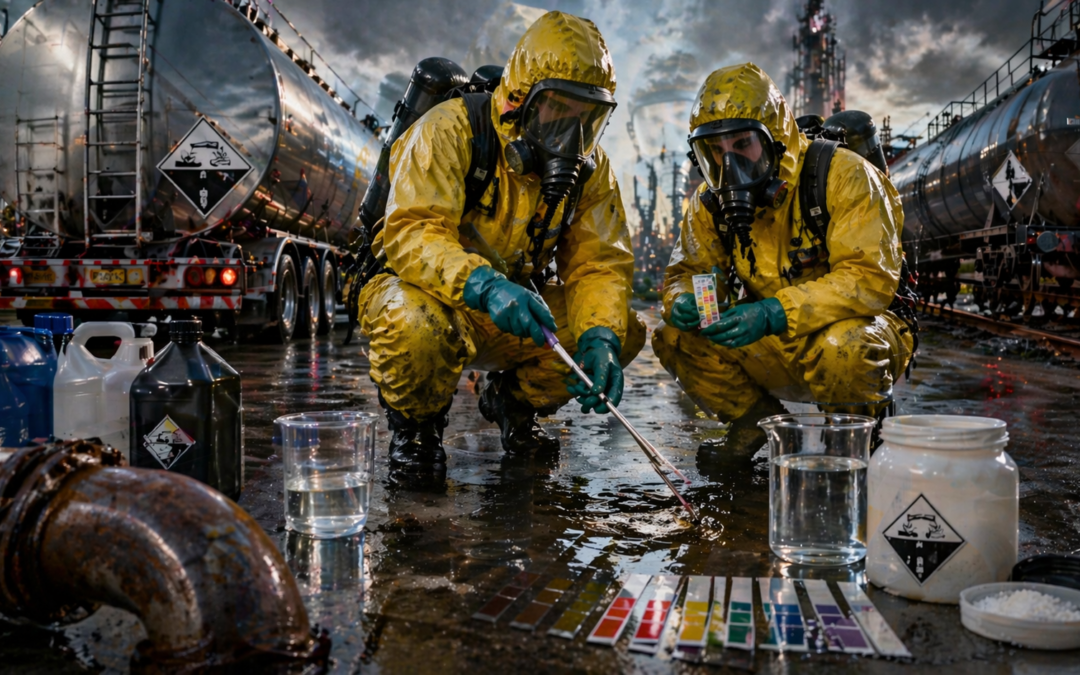
Corrosives: The Silent, Dangerous Force at Every Turn
When you think about hazardous materials, corrosives often slip under the radar. Yet, these substances – whether in your kitchen, at the local construction site, or in industrial tanks-are among the most dangerous chemicals responders face. As Bobby Salvesen and Mike Monaco both pointed out, corrosives can be found practically anywhere. And it’s not just the industrial sites we should be worried about. As they explained, household items – everything from cleaning supplies to batteries-can be just as lethal when mishandled.
What Exactly Is a Corrosive?
A corrosive is a substance capable of destroying or irreversibly damaging another surface or living tissue through a chemical reaction. For hazmat teams, this means everything from skin burns to the destruction of vital organs – and it doesn’t stop there. Corrosives don’t just attack our bodies; they can obliterate equipment, including meters, tools, and protective gear.
Corrosives come in many forms, but they can generally be broken down into acids and bases. Acidic corrosives contain hydrogen ions (H⁺) while basic corrosives feature hydroxide ions (OH⁻). These chemicals can be either organic, meaning they contain carbon, or inorganic, which means they don’t.
Bobby pointed out an interesting distinction: acids, like those used in cleaning products or found in common beverages, are usually labeled simply as “acids,” whereas bases are often referred to as “alkalis” or “caustics.” The pH of a substance plays a huge role in determining whether it’s classified as an acid or a base. But it’s more than just pH that we need to consider-concentration also determines the strength of a corrosive. A small amount of a weak acid or base may cause little harm, but the same substance in a concentrated form can be deadly.
Acids, Bases, and Their Diverse Forms
When we think of corrosives, the first image that comes to mind is likely a liquid. But they can be gases, solids, or liquids. Each form behaves differently and presents unique challenges for hazmat teams.
Mike shared a vivid example: hydrogen chloride gas, a common corrosive, poses significant risks. When this gas comes into contact with water (like the sweat on your skin), it immediately forms hydrochloric acid, burning whatever it touches. The ability of corrosives to change states-from solid to liquid to gas-means they can be much more dangerous than we might expect. For instance, Drano, often thought of as a household product for clearing drains, contains sodium hydroxide, a highly corrosive base. But it’s not just the domestic scene we need to worry about.
Corrosives Are Everywhere
It’s easy to underestimate just how ubiquitous corrosives are in our daily lives. As Bobby explains, these substances are all around us – whether in our homes, at work, or in transit. In fact, during any fire or hazmat response, you can be almost guaranteed that there will be some form of corrosive at play.
Take a typical home, for example. Inside, you’ll find acids like citric acid in cleaning supplies and even in common food items like lemons, as well as bases like Drano for unclogging drains. And in industrial settings, phosphoric acid is used in the production of soft drinks like Coca-Cola, while hydrofluoric acid is employed in glass etching. You might even encounter sulfuric acid in car batteries, all of which are corrosive.
Bobby and Mike also highlighted how these chemicals are transported – often in large, heavy containers that reflect the weight of the substance inside. For instance, when driving through the countryside, you might notice trucks with specific shapes. A “drinking straw on wheels” trailer, as Bobby called it, often transports acids like hydrochloric acid. These heavy-duty transports, including rail cars and large plastic totes, carry significant volumes of corrosives, which are classified as Class 8 hazardous materials, marked with a distinctive white and black placard featuring a picture of burning hands and metals.
Understanding pH Testing
When it comes to identifying acids and bases in the field, the process is surprisingly simple: pH paper. Mike and Bobby both emphasized the importance of knowing how to use this tool effectively. When you’re dealing with acids and bases, the pH paper gives a quick readout. Acids will turn the paper red, while bases turn it blue. But it’s not as simple as just taking a reading and calling it a day.
Bobby explained the issue of subjectivity in pH readings. The paper’s color is often influenced by the lighting conditions and the observer’s perception. This is why it’s important to test multiple strips and compare results. Furthermore, some substances, such as bleach, can interfere with the pH test, changing the color too quickly for accurate reading. When dealing with corrosive materials, it’s crucial to account for these variables, especially when you’re in the field and time is of the essence.
The Hidden Dangers of Corrosives in Transportation
One aspect of transporting corrosives that Bobby emphasized is their potential to mix and create dangerous chemical reactions. For example, a truck carrying two different corrosive materials could create explosive or toxic fumes if the substances mix accidentally. It’s a risk that responders must constantly be aware of, as any spill or leak could be much more dangerous than initially anticipated.
The transportation of corrosives is also heavily regulated, with placarding systems and specific rules governing the weight and type of chemicals being transported. When responding to hazmat incidents, it’s essential to understand these guidelines to ensure safety. For instance, Bobby has developed a “rule of thumb” when it comes to recognizing certain trailers on the road, allowing responders to identify the type of hazardous material being transported before they even arrive on scene.
Neutralization: The Art of Managing Corrosives
Dealing with corrosives involves more than just containment. In some cases, especially when the material is spilling or leaking, neutralization is necessary. Mike walked me through the process: when a corrosive acid is encountered, responders will use a weak base (like sodium bicarbonate) to neutralize it, turning the dangerous substance into a much safer material. Conversely, if the material is a base, a weak acid would be used.
However, neutralization isn’t always as straightforward as it sounds. First, the pH of the substance must be carefully monitored, and secondly, this process often generates a significant amount of heat, creating the risk of burns and other hazards. That’s why Bobby and Mike both stressed the importance of using a slurry-a mixture of the neutralizing agent and water-to slow down the reaction and prevent an immediate violent burst of heat.
Safety Protocols and Best Practices
Perhaps the most important takeaway from my conversation with Bobby and Mike is the importance of safety when dealing with corrosives. Both acid and base can cause significant damage to the human body, but they do so in different ways. Acids often burn immediately upon contact, whereas bases have a delayed reaction, meaning they can silently do damage before you even feel it. This delay makes bases particularly dangerous since responders might not notice the injury until it’s too late.
When dealing with corrosives, decontamination is critical. For both acids and bases, copious amounts of water are necessary to wash away the chemical before it causes further damage. The key, however, is consistency and volume: responders need to keep the water flowing for 15 to 20 minutes to ensure full decontamination.
A Final Word
Corrosives are ubiquitous and deadly, but with the right knowledge and training, responders can face these dangerous materials with the proper tools and strategies. The next time you encounter a corrosive substance, remember: while these chemicals may be “everywhere,” they’re never something to take lightly. Whether you’re on the job as a first responder or simply navigating the everyday environment, understanding the complexities of corrosives can make all the difference in preventing injury and ensuring safety.
For those in hazmat response, continuous training and attention to detail are key – because in this field, there’s no room for error.