
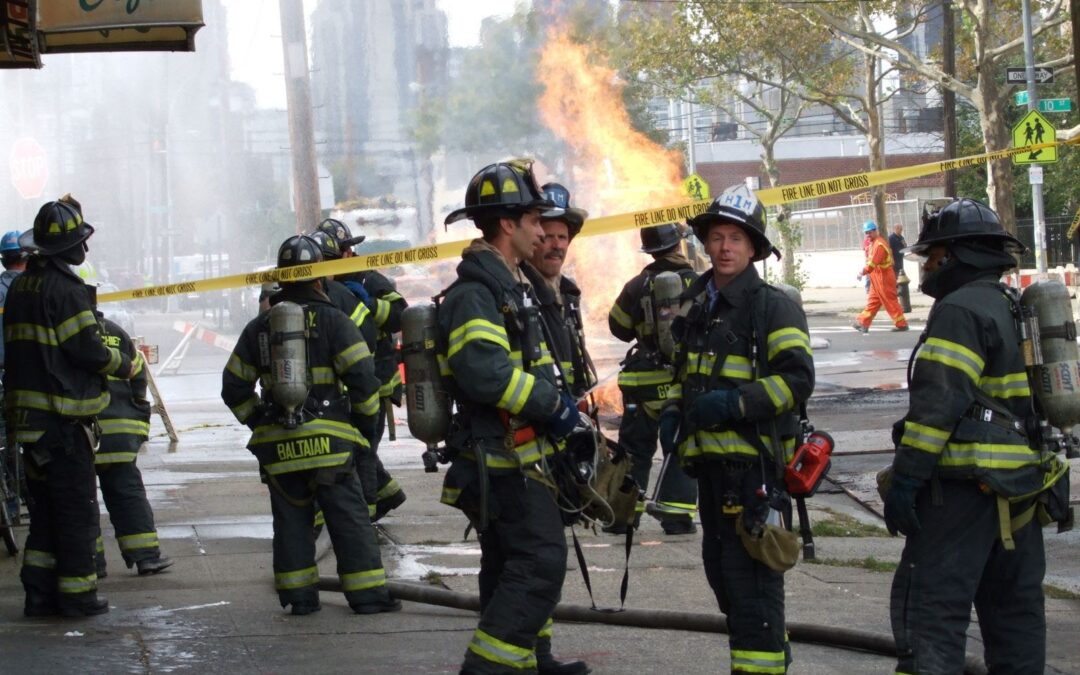
Natural Gas Emergencies: The Routine Call That Demands Your Full Attention
Natural gas emergencies are among the most common hazardous materials incidents firefighters encounter. The familiar dispatch of “odor of gas” is heard countless times every day across the country, and in most cases, the incident ends without injury or major property damage. That familiarity, however, can create one of the greatest hazards on the fireground: complacency.
A faint odor inside a residence may be nothing more than a loose appliance connection. The exact same odor could also be the first indication of a failed underground gas main allowing methane to migrate beneath streets, into basements, and throughout multiple occupancies. Until responders understand where the gas is coming from and how it is behaving, every natural gas incident deserves to be treated with the same disciplined investigative mindset.
Successful operations are rarely determined by aggressive tactics. They’re determined by understanding the infrastructure, recognizing chemical behavior, using atmospheric monitoring correctly, and making deliberate decisions that reduce risk for responders and the public alike.
Understanding the Natural Gas Distribution System
Every natural gas emergency begins long before the gas reaches a building.
Natural gas travels through an extensive distribution network that starts with massive interstate transmission pipelines carrying enormous volumes of product across the country. Those transmission lines feed regulator stations that progressively reduce pressure before supplying transmission mains, distribution mains, and eventually individual service lines leading into homes and businesses.
By the time natural gas reaches a residential appliance, the pressure has been reduced dramatically. While transmission lines may operate at hundreds of pounds per square inch, residential systems typically operate at only a fraction of a PSI.
Understanding that progression is critical, as each valve in the system controls a different portion of the network. Shutting off a valve behind a stove affects a single appliance. Closing a curb valve may interrupt service to an entire building. Operating a main valve could affect an entire neighborhood.
The nation’s aging infrastructure adds another layer of complexity. Many older communities continue to rely on steel gas mains that have been in service for decades. Corrosion, shifting soil, excavation damage, and deteriorating fittings all contribute to the increasing number of gas leaks that departments investigate every year. While many municipalities continue to replace older piping with modern plastic systems, responders must assume they could encounter virtually any type of infrastructure, depending on the community.
Understanding the system allows responders to make smarter decisions before ever attempting to control the leak.
The Chemistry Behind Every Gas Leak
Although commonly referred to simply as “natural gas,” the product delivered through utility systems is actually a mixture of several gases. Methane makes up the overwhelming majority, with smaller amounts of ethane, propane, butane, and nitrogen present depending on the source and distribution process.
For operational purposes, methane largely dictates how natural gas behaves.
Methane is colorless, odorless, and it is lighter than air.
It is classified as a Class 2.1 flammable gas because its greatest hazard is fire and explosion.
One of the most misunderstood facts about natural gas is that the smell everyone recognizes isn’t methane at all. Utility companies intentionally add mercaptan, a sulfur-containing odorant that gives natural gas its distinctive warning smell.
That distinction has significant implications during emergency responses.
There are situations where responders cannot rely on their sense of smell. Natural gas may be transported or stored before odorization occurs, and as gas migrates through soil, the surrounding earth can strip away much of the mercaptan. The result is an atmosphere containing flammable concentrations of methane with little or none of the familiar odor firefighters expect.
Human physiology creates another challenge. After prolonged exposure to mercaptan, responders begin experiencing olfactory fatigue. The odor becomes less noticeable despite the concentration remaining unchanged. Many responders mistakenly believe conditions are improving when, in reality, only their ability to detect the smell has diminished.
For that reason, atmospheric monitoring should always take precedence over human senses. Meters provide objective information. Our noses do not.
Why Explosive Limits Matter
Few chemical properties influence tactical decisions more than explosive limits.
Methane has a Lower Explosive Limit (LEL) of approximately 5 percent in air and an Upper Explosive Limit (UEL) of roughly 15 percent. Below 5 percent, there isn’t enough fuel to support combustion. Above 15 percent, there isn’t enough oxygen. Only between those two values can ignition occur.
Many responders naturally assume that the highest gas concentration poses the greatest explosion hazard. In reality, the opposite can often be true.
The most violent combustion generally occurs near the ideal fuel-to-air mixture, approximately 10 percent methane in air. At that concentration, both fuel and oxygen exist in nearly perfect proportions for rapid flame propagation. This becomes particularly important when considering ventilation.
A structure containing gas above the Upper Explosive Limit may not ignite because the atmosphere is too fuel-rich. However, introducing ventilation begins diluting that atmosphere. As fresh air enters the building, the gas concentration decreases, passing through the explosive range before becoming too lean to burn.
Without continuous atmospheric monitoring, responders may unknowingly create the exact conditions necessary for ignition.
Ventilation remains an important tactical tool, but it should always be coordinated with atmospheric monitoring, ignition source control, and leak isolation rather than being performed automatically upon arrival.
Every Meter Reading Has Context
Combustible gas indicators provide far more information than a simple numerical reading. A reading only becomes meaningful when considered alongside its location.
Elevated combustible gas readings behind a residential stove strongly suggest an appliance-related leak. Finding the exact same readings inside the lobby of a large apartment building tells an entirely different story. There are a few natural gas appliances located in common areas, so responders should immediately consider gas migration through utility spaces, damaged underground piping, or other failures in the distribution system. The same investigative mindset applies outdoors.
Gas rarely travels in straight lines. Underground leaks may migrate through utility trenches, sewer systems, conduit runs, foundation cracks, and soil before entering nearby structures. Responders should evaluate basements, utility rooms, subsurface voids, adjacent buildings, grassy areas, and any other locations that can collect migrating gas.
Methane’s physical properties also influence the search. Because methane is lighter than air, it naturally rises. Attics, cocklofts, upper floors, ceiling voids, and HVAC systems often serve as collection points where dangerous concentrations can develop long before they become obvious to building occupants.
Good investigations aren’t driven by guesswork. They’re driven by understanding where the gas wants to go before the meter confirms it.
Isolating the Leak Safely
One of the most common mistakes during natural gas emergencies is shutting off the wrong valve.
Every valve within the distribution system serves a specific purpose and controls a different portion of the gas supply. Closing unnecessary valves can complicate restoration efforts, extinguish pilot lights, interrupt service to neighboring buildings, and create additional hazards once the utility attempts to restore the system.
The preferred approach is simple: start as close to the leak as possible and work outward only when necessary.
That progression generally begins with the appliance shutoff valve, then moves to interior riser valves, individual meter valves, master meter valves, head-of-service valves, and, if conditions demand it, curb valves.
Main distribution valves should rarely become part of the fire department’s mitigation strategy unless absolutely necessary and coordinated with the utility company.
The objective isn’t simply shutting off gas. It’s shutting off only the amount of gas necessary to safely control the incident while minimizing unintended consequences.
Atmospheric Monitoring Is the Foundation of Every Response
Modern gas emergencies are managed with instrumentation, not assumptions. Most fire departments carry multi-gas meters capable of measuring combustible atmospheres as a percentage of the Lower Explosive Limit. Utility companies often use instruments that display the actual gas concentration in the air. While both instruments may appear to disagree, they’re frequently measuring the same atmosphere using different scales.
Understanding those differences prevents unnecessary confusion during critical incidents. Highly sensitive combustible gas “sniffers” provide another valuable capability. Rather than determining whether an atmosphere is safe, these instruments help pinpoint the precise location of a leak. Used together with a standard combustible gas indicator, responders gain both atmospheric awareness and the ability to locate leaks.
Neither tool replaces sound decision-making. They simply provide the information necessary to make better decisions.
The Difference Between Routine and Catastrophic
Natural gas emergencies rarely become catastrophic because responders lack equipment. They become catastrophic when assumptions replace investigation.
Every odor report deserves a thorough size-up. Every atmospheric reading deserves context. Every ventilation decision deserves careful consideration. Every valve deserves to be identified before it’s operated.
These incidents reward patience, discipline, and a solid understanding of both chemistry and infrastructure. The firefighters who consistently manage natural gas emergencies successfully aren’t necessarily the fastest crews on scene. They’re the ones who recognize that every leak tells a story and take the time to understand it before acting.
Natural gas incidents may be routine, but they should never become routine in the minds of responders. The next dispatch could be a minor appliance leak or the first warning sign of a rapidly developing disaster. Continuous training, regular meter proficiency, and a thorough understanding of natural gas behavior remain the best tools firefighters have for ensuring the outcome stays routine.